Nearly half a century after 1979, the Islamic Republic faces two converging crises. At home, a substantial part of society has moved away from religious government. Abroad, the architecture built by the regime has been deeply weakened. Could Iran, a major centre of political Islam’s rise, become an equally important centre of its decline? And who would be entitled to construct what follows?
Hegel’s cunning of reason offers one way to pose the question, provided history is not treated as providence. No final destination is written in advance. Actors pursue particular purposes, yet their collisions sometimes produce an outcome none of them intended.
In a different intellectual tradition, Adam Smith’s invisible hand also addresses unintended consequences. The two philosophies are not interchangeable. Both nevertheless caution against reducing a historical situation to the sum of its participants’ plans.
1979 and the changing language of revolution
The Iranian revolution was more than a succession of rulers. It installed religious government in a country that had experienced constitutionalism, parliament and modern institutions since the early twentieth century. Its consequences extended beyond Iran.
It can be understood as a shift within the century’s revolutionary paradigms. Long before the Soviet Union dissolved, 1979 demonstrated that Marxism no longer held a monopoly on revolutionary mobilisation. This does not mean the left was absent or that its entire intellectual tradition had become exhausted. It shows how an Islamist project could absorb aspirations previously expressed in socialist or nationalist language.
That encounter did not emerge from nothing. Parts of the anti-imperialist left and parts of the clergy opposed to secularisation shared adversaries and reference points: the United States, Israel, Western power and Palestine. Their differences remained substantial. They did not prevent a coalition whose religious component eventually subordinated the others.
Exporting revolution and confronting Israel
Revolutionary export and hostility to Israel’s existence became closely linked in the Islamic Republic’s founding project. These were not simply separate diplomatic files. They expressed a conception of the regime’s mission, whose costs Iranian society bore while rulers used it to justify coercion and permanence.
The system of guardianship of the jurist did not conceive itself solely as the government of one territory. It claimed a transnational purpose. In this framework, Israel represented an order to combat rather than merely a competitor with which to negotiate influence.
Hezbollah’s formation, support for Hamas and Palestinian Islamic Jihad, Iraqi networks, intervention in Syria and assistance to the Houthis gradually gave this ambition material form. Their origins, local interests and degrees of dependence must be distinguished. Together, however, they supplied an architecture through which Tehran could act far beyond its borders.
The present confrontation belongs to that history. It was not predetermined to take its current form, and each actor remains responsible for its decisions. But direct conflict cannot be explained separately from decades of armed projection and a foundational ideological hostility toward Israel.
The unintended consequences of September 11
After the attacks of 2001, George W. Bush placed the Islamic Republic in the axis of evil. Washington nevertheless overthrew Saddam Hussein in 2003 on claims about weapons of mass destruction that were not substantiated. A major adversary of Tehran disappeared, creating an opening American strategy had not intended to provide.
Shia parties and organisations, including Badr, possessed long-standing ties to Iran’s rulers and gained positions in Iraq’s new order. Iraqi pluralism nevertheless rules out treating all Shia actors as Tehran’s agents. Nor can American withdrawal be attributed to the Quds Force alone. U.S. decisions, negotiations with Baghdad, Iraqi institutions and local rivalries all mattered.
Dissolving the army and de-Baathification also contributed to state disorganisation and exclusion that fed insurgency. The organisation that became ISIS developed in this environment and subsequently in Syria’s war. No single policy created it. These decisions formed part of a chain that allowed multiple forms of armed Islamism to expand.
Afghanistan exposes a different limit. The Taliban were driven from Kabul in 2001; the Doha agreement was signed in February 2020; they returned in August 2021. Two decades of foreign military presence and institution-building had not created an order able to withstand them.
That does not imply unanimous Afghan acceptance of Taliban rule. Many citizens, particularly women, defended another future. The failure instead highlights the fragility of institutions dependent on external support, confronting insurgency, corruption and local balances that military superiority alone could not transform.
From October 7 to crisis at the centre of Iran’s regime
Hamas’s October 7, 2023 attack opened a new sequence. It did not aim to dismantle Tehran’s regional networks. Israel, taken by surprise, did not necessarily enter war with a fully formed plan to remake the Middle East. The United States likewise lacked a consistent strategy for Iran’s political future.
Their collision nevertheless produced results contrary to the interests of several initiators. Hamas was weakened, Hezbollah suffered major losses and Bashar al-Assad’s fall removed an essential link. Those organisations have not all disappeared and retain unequal capabilities. But the architecture that gave the Islamic Republic regional depth was damaged at its foundations.
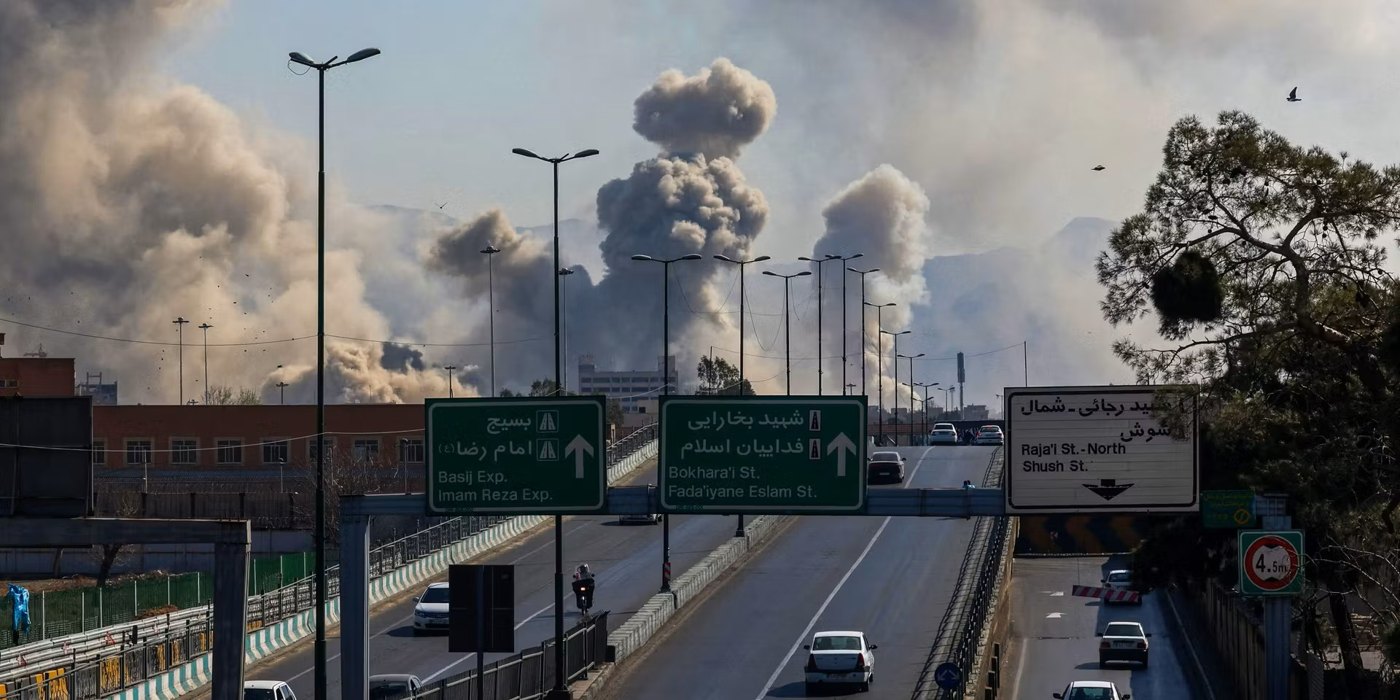
Direct American intervention in June 2025 marked another threshold. The 2026 war then brought crisis to the system’s centre. The deaths of Ali Khamenei and senior officials on February 28 turned erosion abroad into a crisis of command and succession.
Society changed before the war
What distinguishes the moment is not military damage alone. Iranian society had already entered a long transformation. The election of May 23, 1997, the limits of reform, subsequent protests and generational change made the distance between social expectations and ideological government increasingly visible.
Marcel Gauchet’s concept of an exit from religion illuminates one dimension of that process. It does not mean the disappearance of belief. It means moving beyond an order in which religion supplies the organising principle of law, government and social life. Applying it to Iran is an interpretive argument, not a claim that the country mechanically repeats Europe’s history.
Woman, Life, Freedom, beginning in September 2022, gave that separation an especially clear expression. Mobilisation in late December 2025 and repression in January 2026 deepened the conflict. I read the latter as a rupture of legitimacy; its exact extent and irreversibility cannot be established by assertion alone.
The fact that the 2022 movement preceded October 7 by roughly a year matters. Domestic crisis was not manufactured by foreign strikes. Two distinct dynamics converged: one concerned legitimacy, the other resources of power.
Such convergence can create a revolutionary situation without producing a revolution. Weakened rulers and citizens unwilling to accept the old order are insufficient. Organisation, coordination, a political project and institutions capable of transferring authority are necessary as well.
Nor has war demonstrated that citizens automatically rally to the regime. Defending a country, its inhabitants and territorial integrity does not require defending the Islamic Republic. Some Iranians may fear bombing and reject their government; others may see its weakening as an opening. These positions cannot be collapsed into a single national opinion.
War does carry an immediate political danger: it displaces society from the centre of events and puts armies and interstate negotiations in its place. Iran’s future then becomes the object of foreign calculations. None of those calculations guarantees Iranian freedom.
A cycle can end without Islamism disappearing
The sequence begun in 2023 may signify more than regional realignment. It could mark the exhaustion of a paradigm in which religious coercion is supposed to organise a state, a society and a transnational mission. This is a historical possibility, not a completed ending.
The Taliban still govern Afghanistan. Other Islamist currents have social and political constituencies. Religion will not disappear from the Middle East. But the Islamic Republic’s departure, if it emerged from the convergence of social change, lost legitimacy and diminished power, would resonate far beyond Iran.
The country that was a major arena of political Islam’s accession to power could become a central arena of release from religious tutelage. That is the sense in which history’s cunning can be invoked, without destiny or providence.
Who authors the day after?
War is neither necessary nor sufficient for that transformation. It may change balances of power, damage institutions and accelerate crisis. It cannot supply the legitimacy of a successor order. If citizens remain spectators, the regime’s defeat can leave their political dispossession intact.
The issue is therefore which force would fill a vacuum, which process it would offer and which limits it would accept. Society must become a political subject again. That requires attention to international interests as well: transition in a country with Iran’s size, resources and location cannot occur outside the world.
The monarchy’s final crisis offers a useful contrast. In 1978–79, American support fragmented as royal power disintegrated. Today, states hostile to the Islamic Republic may nevertheless fear its fall. Their reasons vary; attributing a single shared project to them would be excessive.
They may fear fragmentation, insecure borders, uncontrolled weapons or disrupted supplies. They may also anticipate the weight of an Iran that invests in development and normalises relations. The latter concern is a hypothesis about regional calculations, not a demonstrated intention shared by every neighbour.
Wanting the regime weakened must therefore be distinguished from wanting it removed. A state can prefer fewer missiles and interventions while retaining a familiar interlocutor. American military pressure alone does not establish a coherent programme for a post-Islamic Republic Iran.
The answer cannot be denunciation of foreign governments alone. A political day after must become imaginable: who maintains essential services, protects territorial integrity, controls weapons and gives citizens the power to decide?
A limited transitional authority, free elections and a constituent assembly offer a procedural answer. They can connect domestic demands and lessen external fear of a vacuum. Their effectiveness would depend on real safeguards: pluralism, equal rights, a time-bound transition and no faction’s privileged entitlement to dictate the constitution.
A constituent assembly is therefore more than an institution to convene after collapse. Its prospect changes the question now. Instead of asking which leader should rule Iran, it asks who has the right to choose its political order.
That right belongs to citizens. Neither the United States, Israel, another power nor a particular opposition faction can replace them. Leaving an order that claims to know their destiny in advance acquires its full meaning only when they gain the capacity to determine that destiny together.