Nasser Etemadi: This is not the first time that, in the modern era, European societies have faced serious and violent threats to modernity and democracy. The latest example may be fascism in Europe, especially Nazi Germany, which ended at the cost of a bloody world war and the division of Europe—and Germany itself—into two opposing camps. Can contemporary Islamism, especially in its “jihadist” form, be regarded as an unprecedented but comparable form of “fascism” or “totalitarianism”? What would it take to bring this phenomenon to an end—and at what cost?
Mehdi Mozaffari: Fascism was one of three forms of totalitarianism in twentieth-century Europe after the First World War. By “three forms,” I mean Bolshevism, fascism and Nazism, which held power in Russia, Italy and Germany from 1917 to 1933. Western theorists—from Hannah Arendt to Raymond Aron and François Furet—who have studied Europe’s three principal forms of totalitarianism have generally identified five important features they shared: 1) a single ideology; 2) a cult of personality; 3) terror; 4) a one-party system; and, finally, 5) control of the economy from the center. I should add that Mussolini himself introduced the word “totalitarianism.” By it he meant a total or all-encompassing state, one that included everything.
What distinguishes what I call Islamic “fascism” or totalitarianism is this: like its three European counterparts, it has a single ideology, a cult of personality and an apparatus of terror, but no one-party system or centrally controlled economy in the usual Western sense. The absence of a one-party system does not mean that Islamic fascism or totalitarianism did not seek, or try, to impose one. On the contrary, the slogan “Only one party: the Party of God!” (championed by Khomeini himself) and the establishment of the Islamic Republican Party when the clerics first came to power in Iran were among the repeated efforts to create a one-party system. The party’s failure—its inability to last—was rooted largely in the absence of a party culture in Iran, as in other Muslim societies.
One could even say that Iran is currently governed by a kind of one-party system, although it resembles a disorganized one-party system, taking different forms and appearing through numerous groups and organizations with more or less similar characteristics.
The expression “hey’ati system” may better capture the character of Iran’s “one-party” system. Its model is the religious hey’ats—associations that have existed for centuries. In a sense, Iran’s political system grew out of these associations, which took on a political role during the Islamic Revolution.
I said that, compared with the totalitarian systems of the twentieth century, Islamic totalitarianism lacks a centrally controlled economy. I should also make clear that, in Islamic totalitarianism, a rent-based economy has taken the place of a centrally controlled one. Following the traditions of “Oriental despotism” or the “Asiatic mode of production,” the state—or the caliph or sultan—holds all the country’s wealth, oil and non-oil alike, and uses it to consolidate and carry out its ideological aims.
What gives “Islamic totalitarianism” its more specific character is precisely its Islamic nature. The three European totalitarian systems of the twentieth century were “earthly,” or secular; Islamic totalitarianism is religious. This distinction has important consequences. The European systems regarded “the people” as the source of their power and legitimacy, whether that “people” meant the proletariat or the Volk in the language and imagery of German Nazism.
The European totalitarian systems’ claim that their power and legitimacy came from the “proletariat” or “the people” also created a kind of responsibility for those regimes and their leaders. Unlike religious despots, for example, they claimed to be accountable not to God but to a people—although in practice they repressed that people.
In Islamic totalitarianism, whose developed form is the Islamic Republic of Iran, the source of power and the legitimacy of those who wield it is not the people but God, represented on earth, for example, by the vali-ye faqih. From Khomeini to Khamenei, and from bin Laden to al-Zawahiri and Abu Bakr al-Baghdadi, the leaders of contemporary Islamic societies and movements have all regarded themselves as accountable to God alone. It is no coincidence that Iran’s constitution explicitly emphasizes not “the people” or “the nation”—terms used very rarely in the document—but the umma, or, more precisely, the “Islamic umma.”
For this reason, Islamic totalitarianism is considerably more rigid—or, if you will, “more totalitarian”—than its European counterparts. Article 4 of the Constitution of the Islamic Republic of Iran states: “All civil, penal, financial, economic, administrative, cultural, military and political laws and regulations, and all other laws and regulations, must be based on Islamic criteria. This principle applies absolutely and generally to all the articles of the Constitution and to all other laws and regulations; the determination of this matter rests with the jurists of the Guardian Council.”
This single constitutional article is enough to show that Iran’s political system leaves no room for “the people” or “the people’s will.” If all the country’s laws, regulations and directives must be based on an interpretation of Islam approved or determined by the jurists of the Guardian Council, there is effectively no room left for the exercise of the people’s political will. In this respect, compared with secular totalitarianism, Islamic totalitarianism is more intense and, as it were, more tenacious.
Nasser Etemadi: Islamic totalitarianism is commonly said to be the product of the failure of modernization, or imposed modernization, particularly in Iranian society. Yet it is striking that the “unfinished” or failed project of “modernity,” which apparently has the support of most Muslim societies today, including Iran, has not been able to renew itself and become a political alternative to anti-modern Islamism. Could this failure originate in points of convergence between the different readings of modernity and contemporary Islamism?
Mehdi Mozaffari: The word tajaddod, usually translated as “modernity,” has a complex and ambiguous history. Literally, it means “making new,” which does not convey the meaning of modernity in Western culture. Like capitalism and liberalism, modernity originated in Europe and is a product of the Renaissance and the Enlightenment. The historical emergence of modernity in Europe and its concurrence with capitalism and liberalism were not accidental. Their common foundation was recognition of the principle of “private property.” This cannot be reduced to ownership in the narrow economic sense. Recognition of private property helped free the individual from the constraints of tradition and the old order; it also affirmed a person’s rights over their own body and possessions. The owner is, first and foremost, a rights-bearing person. John Locke, the seventeenth-century English philosopher and defender of the English Revolution, explained this with particular clarity. A person deprived of property is, in the first instance, deprived of rights.
In modern political philosophy, particularly in Locke, property—and especially private property—is a non-economic subject. The more important aspect of the question was the transfer of power from God to the rights-bearing individual. The essence of the modern project is that the human being, as a bearer of rights, takes the place of God. This marks the beginning of the ongoing and unfinished process of human emancipation. It may be no coincidence that the great modern revolutions of the seventeenth and eighteenth centuries in Europe were revolutions against systems based on divine right—in essence, against systems that denied individual rights and freedoms.

Another consequence of the simultaneous emergence of modernity and liberalism, an important feature of the historical movement of modernity, was the birth and flourishing of critical thought. So long as God was regarded as the center of the world, every kind of critical thought was treated as an instance of blasphemy and rejected on that basis.
With the disappearance of “God’s centrality”—or of systems based on divine law—critical thought took the place of faith in the West. From then on, no boundary, no so-called red line, remained beyond the reach of questioning and criticism. The historical movement of modernity can therefore be broadly described as an age of criticism and of criticism of criticism. Democracy, itself a product of this period and of the theoretical and practical criticism of religious institutions and monarchies based on divine law, continually exposes itself to criticism.
I do not see this same culture of inquiry in Muslim societies. One explanation may lie in our own historical and cultural inheritance. The historical process of modernity in the West, from the Renaissance to the present, can also be regarded as a return to ancient Greece—or, more precisely, to Athenian democracy. It was a polytheistic civilization and, for that reason, the birthplace of philosophy: the birthplace of questioning and answering, dialogue, inquiry and exploration. If this historical and cultural inheritance allows Western societies to be called philosophical societies—societies that ask questions and think critically—Muslim societies, by comparison, remain at the stage of faith. We should remember that the French Revolution, for better or worse, gave effect to the ideas of the Encyclopedists and philosophers such as Rousseau.
Nasser Etemadi: If modernity, in the final analysis, is the historical process of the “emancipation of the individual,” that emancipation took place through great collective efforts—that is, through major historical revolutions. On this basis, can we say that contemporary Muslim societies today need, above all, political revolutions so that the project of modernity—the emancipation of the individual and society from religious despotism—can be realized?
Mehdi Mozaffari: As I said, the experience of the French Revolution, for example, shows that theoretical criticism preceded practical criticism. In other words, intellectual revolution prepared the ground for political revolution. This is so regardless of whether we accept the outcomes of such revolutions or assess their achievements critically.
By contrast, if we consider the intellectual preconditions of the 1979 revolution, we find ourselves confronted with a profound intellectual and philosophical poverty. Neither in Iran nor in any other Muslim society have we encountered a philosopher comparable to Rousseau or Voltaire who originated important ideas and whose ideas were also widely received by the public. In societies such as Iran, thought still takes its bearings from faith rather than philosophy. In general, philosophy has had no real place in the Islamic world, and attempts to establish philosophical thought have repeatedly met the resistance and repression of religious authorities.
With the beginning of the “Hellenistic” period, coinciding with the reign of the Abbasid caliph al-Ma’mun in the ninth century, philosophers such as Avicenna, al-Farabi and Miskawayh did emerge. Al-Farabi’s most important intellectual project, for example, was to bring together the political ideas of Aristotle and Plato. He sought to define a virtuous city headed by a philosopher. But, as I said, this current met resistance and repression from Islamic dogmatism, represented by figures such as Ibn Hanbal and Abū Hāmid al-Ghazali. In more recent history, the consequences of this dogmatic current can be seen in the thought of Hassan al-Banna in Egypt and Ruhollah Khomeini in Iran. In short, Hellenism and philosophical thought appeared in Muslim societies but, after facing the repression of Islamic dogmatism, could not rise again. There is only one brilliant exception: Ibn Khaldun.
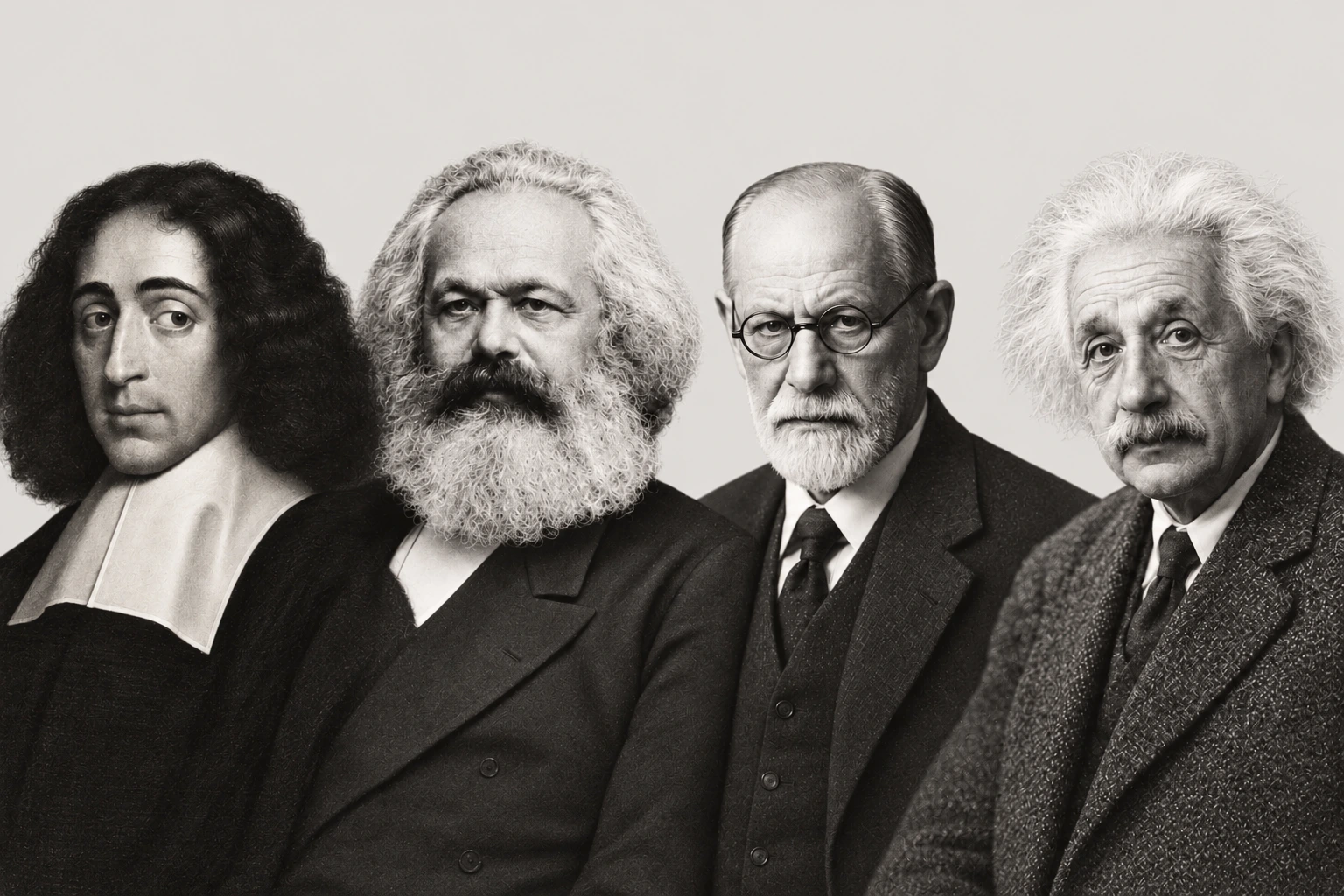
One consequence of this philosophical failure was that critical thought found an outlet in poetry, among writers such as Rumi, Saadi, Ferdowsi and Hafez. These literary achievements were like rare flowers appearing, at long intervals, in a barren desert. In the West, by contrast, such flowers came to form fertile gardens. The reason is that the most important philosophers of the Renaissance and Enlightenment in the West followed one another at short intervals. Many of them—Descartes, Spinoza, Hobbes, Kant, Hegel and Marx—were contemporaries or lived at nearly the same time. Their defining feature, to this day, has been their continuing criticism of one another’s ideas. We never see this cumulative quality of criticism in the history of Muslim societies.
Set those names from Western civilization alongside figures such as Jalal Al-e Ahmad, Ali Shariati and Mehdi Bazargan, and you can see the intellectual wasteland in which Iran’s 1979 revolution took shape and has continued to this day. Even thirty-six years after the Islamic Revolution, Iranian society remains truly unfamiliar with critical thought; in the best case, this experience is struggling through its earliest stages.
Over the past three decades, how many educated Iranians who also know foreign languages can be found who have undertaken a serious critique of religion in their own society? Even after more than three decades, for many educated people in our country religion remains a forbidden zone, one that must escape questioning and criticism. At best, they seek the impossible reform of this very religious totalitarianism—for example, a slight reduction in the Guardian Council’s vetting powers. None of them is even willing to criticize the Leader and his position and absolute power. Iran’s elite is still unwilling to acknowledge the totalitarian nature of religious power in Iran. Culturally and intellectually, this situation is painful and disastrous.
Knowledge is the precondition for change. In Europe itself, the collapse of totalitarian regimes was the outcome of years of deep study of their nature. How many serious works can one find today on the nature of Iran’s Islamic system that stand alongside European scholars’ and thinkers’ works on fascism, Stalinism and Nazism? Even thirty-six years after the Islamic Revolution, educated people and the Iranian “elite” have not absorbed the idea that what became known in the West as the “Reformation,” or “religious reform,” was the inevitable result of the historical movement of modernity: the institutionalization of critical thought and Christianity’s unavoidable accommodation to that movement. In Iran, as in the West, a genuine Reformation, a genuine religious reform, can arise only from a general movement of criticism of religion—which means religion’s accommodation to modernity.
Nasser Etemadi: If I understand you correctly, Muslim societies, including Iran today, failed to join modernity because they stopped at the stage of criticizing religion, even though, in the words of the “young Marx,” criticism of religion is the beginning and precondition of all criticism and, in that sense, a condition for joining modernity. In contrast with the Western experience, do Muslim societies today need cultural revolutions, or political revolutions that could set major intellectual changes in motion?
Mehdi Mozaffari: Any movement of this kind begins with criticism of religion. On this point, Marx and others who have held similar views are right. The importance of this principle does not mean that religion is good or bad. It matters because, so long as faith takes the place of thought, no room remains for reflection. The first factor that has made contemporary Islamic societies problematic is the dominance of a religious worldview: a society in which religion is the beginning and end of everything. Another factor is “Oriental despotism.” We know that Marx spoke of the “Asiatic mode of production” to explain this phenomenon. The term chiefly expressed his astonishment at a historical reality that could not be explained within his model of historical analysis. For Marx, the “Asiatic mode of production” described a reality in which wealth was concentrated in the hands of one person, thereby preventing the rest of society from obtaining wealth or becoming owners and holders of rights. In our own language, we have called this reality eqta’, meaning “dividing into pieces.” Under this principle, Iranian kings, both in the Islamic and pre-Islamic periods, assigned “parcels” of land to their appointees and generals without transferring ownership of those parcels to them. The king, sultan or caliph remained the sole ultimate and absolute owner of the land and everything in it; whenever he chose, he could take a parcel from one person and transfer it to another or reclaim it for himself.
In fact, the absence of private property meant that even feudalism never took shape in Muslim lands. Machiavelli refers to this feature twice in The Prince. For example, he asks why no one in Iran resisted after Alexander the Great overthrew Darius III. Machiavelli’s answer is that no one owned property beyond the king’s absolute ownership of everything. Elsewhere in The Prince, the Florentine philosopher compares the Ottoman caliph with the king of France. He says that it would be enough to remove the Ottoman caliph for the entire Ottoman Empire to collapse, whereas the fall of the French king would certainly provoke resistance or the emergence of great landowners in every part of France. In other words, Machiavelli means that all of France does not belong to the French king, and his fall would not necessarily bring about France’s collapse.
In short, the religious worldview, what I call Oriental despotism, and rent-based economies together account for the problem confronting Muslim societies today. Rent-based economies place a country’s wealth under the exclusive control of the state or a single power—whether that power is the vali-ye faqih or King Abdullah of Saudi Arabia.