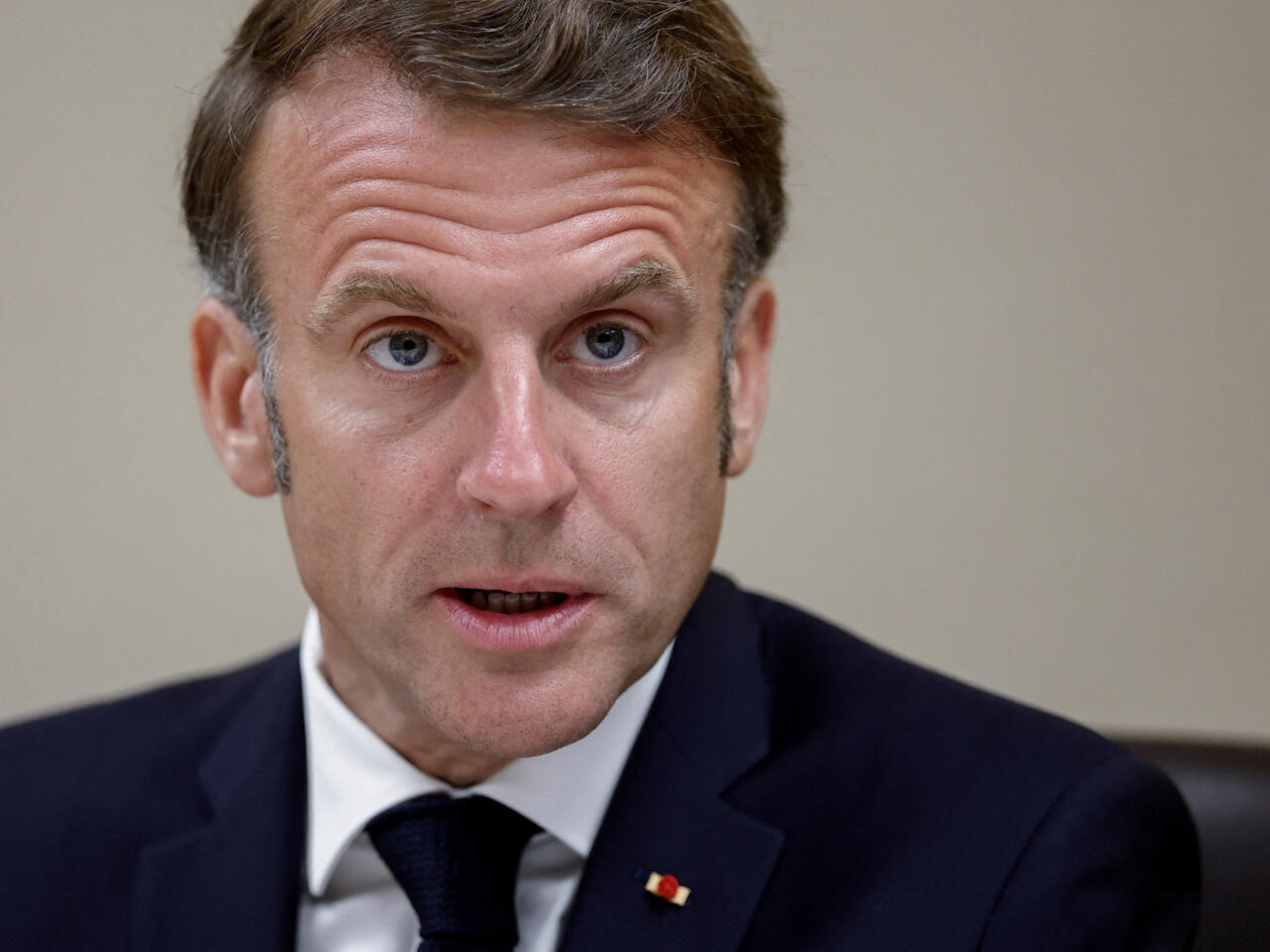
The violence and looting that accompanied the demonstrations of 17 October 2026 point to a crisis whose causes reach far beyond those events. Behind anger over the cost of living, inequality and deteriorating public services lies a deeper contradiction: citizens enjoy extensive political rights, yet seem increasingly unable to influence the decisions that shape their lives. The 2024 dissolution of the National Assembly—and President Emmanuel Macron’s response to its results—gave this contradiction a particularly acute institutional dimension.
France’s crisis stems from the interaction of two forces: an economic order that places an increasing share of social life beyond individuals’ control, and a political system struggling to translate collective demands into decisions regarded as legitimate.
In 2024, 9.8 million people in metropolitan France lived below the monetary poverty line, representing 15.4% of the population covered by the French National Institute of Statistics and Economic Studies (INSEE). But social discontent extends beyond poverty. It also concerns working conditions, unavoidable expenses, territorial inequalities and access to public services. These pressures are compounded by the rapid spread of artificial intelligence, which could transform employment, skills and social relations on a scale greater than that of the previous wave of computerisation. This shift is already raising questions about who controls the organisation of work and how wealth is distributed.
International tensions add to these vulnerabilities. The crisis in the Persian Gulf and disruptions to shipping through the Strait of Hormuz contributed to rising energy prices, which were up 21.3% year on year in September 2026, according to INSEE. Military decisions and international power struggles thus have direct consequences for everyday life in France.
Economic pressures are harder to bear when political institutions struggle to address them. Political parties and trade unions, which traditionally mediated between social conflicts and public decision-making, have lost some of their representative capacity. The February 2026 CEVIPOF political trust barometer illustrates the scale of the problem: just 18% of respondents said they trusted the president, 20% the National Assembly and 15% political parties. Yet support for democracy remains high. What is being rejected, then, is less democracy as a principle than the way it works—and the ability of its institutions to represent society.
This contradiction helps explain the trajectory of Macronism. By promising to move beyond the traditional divide between left and right, Emmanuel Macron helped weaken the party-based political channels that had structured representation in France, without replacing them with durable forms of organisation and deliberation. The promised democratic renewal gave way to a growing concentration of power around the presidency, with presidential authority taking precedence over negotiation and social compromise.
The 2023 pension reform was one example. Resorting to Article 49.3 of the Constitution was constitutionally permissible, but the legality of a procedure does not by itself make a decision politically legitimate—particularly when it faces opposition on such a large scale.
The June 2024 dissolution brought this contradiction to a head. Presented as a way to clarify the political situation, it produced a National Assembly with no absolute majority. The left-wing New Popular Front (NFP) coalition emerged as the largest bloc. Macron nevertheless refused to appoint Lucie Castets, the coalition’s proposed prime minister, citing the risk that her government would be immediately brought down by a no-confidence vote.
The president had constitutional discretion over the appointment. But his decision raised a fundamental question: why ask voters to decide, then deny the coalition that came first the opportunity to try to govern? Parliament could have judged whether such a government was viable. Macron’s choice reinforced the perception that presidential powers could blunt the political force of the vote, deepening an already serious crisis of representation.
The October demonstrations unfolded against this backdrop. Violence and destruction should not be conflated with the movement as a whole, nor do they follow mechanically from poverty; they require their own specific explanation. But condemning them does not remove the need to examine the social discontent that institutions have proved unable to translate into political compromise.
France is therefore facing a double loss of control: economic, as people find themselves with less influence over the conditions of their lives; and political, as their votes seem unable to change the direction of government. These two forms of dispossession reinforce one another. Material hardship fuels protest, while distrust and institutional instability make effective government responses more difficult.
As the 2027 presidential election approaches, a break with the current course cannot be reduced to replacing a president or a parliamentary majority. It would have to address the distribution of wealth, changes in the world of work, public services and the exercise of democratic power. Tackling inequality also means giving citizens a meaningful say in the economic and political decisions that shape their future.
Which political force could carry this agenda forward? The left, which came first in the 2024 legislative elections, calls for economic and social change. But its internal divisions and policy disagreements raise questions about how such a programme could be implemented. Other political forces—from the centre to the right and the National Rally—offer different responses, whose economic coherence, understanding of democracy and means of implementation also warrant scrutiny.
France’s crisis is not simply a sign of an exhausted presidency. It calls into question a political and economic system in which power is becoming more concentrated while collective control over the conditions of life is diminishing. Macron did not create this contradiction, but by weakening older forms of political mediation without building new ones, he sharpened it. The 2024 dissolution—and his refusal to draw political consequences from its outcome—was its clearest expression.
The challenge in 2027 will therefore not be simply to make France governable again. It will be to determine which social and institutional changes could enable citizens to regain meaningful democratic control over their future.