Iran’s economy is entering a crisis that threatens the living standards of a large share of the population. According to projections reflected in World Bank data, the poverty rate could reach 38.8 percent in 2026. The International Monetary Fund projects average inflation of 68.9 percent and a 5.4 percent contraction in real GDP for the same year. These estimates depend on assumptions that must be reassessed as the conflict evolves, but together they describe an economy facing both surging prices and recession.
The burden is distributed unevenly. Sistan and Baluchistan, Kerman, and several southern provinces suffer from particularly severe structural poverty. In western Iran, unemployment and inflation deepen economic insecurity. Families combine multiple jobs to survive, retirees return to work, and children contribute to household income. One of the most politically significant changes, however, is the erosion of the middle class. Teachers, nurses, engineers, and other skilled workers may retain their education and expectations while losing the income and security once associated with their social position.
The Political Break Predates the Economic Crisis
Economic hardship alone does not explain the transformation of Iranian society. Collective behavior is not driven solely by material interest. Moral convictions, individual freedoms, cultural values, and competing visions of a desirable life also shape the relationship between society and the state.
Over several decades, cultural change has widened the divide between a growing part of the population and the norms imposed by the Islamic Republic. The assertion of individual autonomy, changing relations between women and men, declining religious authority in parts of society, and resistance to state intrusion into private life have all generated opposition independently of economic hardship.
The protests of 2017–2018 and 2019 showed how material grievances could rapidly become a political challenge to the regime. In 2022, the Woman, Life, Freedom movement revealed a deeper rupture: the conflict concerned the state’s claimed right to define the terms of individual and collective life. The protests of late 2025 and early 2026 confirmed how closely economic, social, and political grievances had become intertwined.
This distinction matters for American policy. Loss of legitimacy, contraction of a regime’s social base, and weakening of its coercive capacity are not the same process. A government may preserve a powerful security apparatus even after its institutions and values have lost the support of much of society. Force can compel obedience; it cannot by itself produce consent or lasting political stability.
Sanctions Do Not Produce a Single Political Effect
International sanctions have intensified inequality, but they have also enriched networks with privileged access to oil exports, commercial intermediaries, and informal financial channels. As real wages fell, resources became more concentrated around institutions and groups tied to the state.
Those material interests have helped preserve cohesion within parts of the ruling coalition. New restrictions on oil, shipping, and financial channels could alter that balance. If they durably reduce the regime’s ability to market oil and transfer revenue, some networks that profited from sanctions evasion may see their income decline.
That would not automatically turn them against the regime. Scarcity may create new beneficiaries, and dependence on the security establishment may increase. The decisive question is how shrinking resources and rising losses are distributed. When revenue contracts, one faction’s privileges may be protected at another’s expense.
Washington’s stated objective of reducing the Islamic Republic’s financial resources does not by itself amount to a strategy for fracturing the ruling coalition. Nor is it clear that the groups most damaged economically possess the political power to alter military and security decisions. The assumption that pressure will automatically translate into political rupture is therefore a dangerous one.
Repression Still Works
Poverty does not mechanically produce revolution. It may instead reduce the capacity for collective action by forcing people to devote most of their time and resources to daily survival. War adds fear, insecurity, and tighter controls. At the same time, a prolonged conflict raises the economic and political cost of preserving the existing order.
Iran’s distinctive predicament lies in the intersection of that crisis with an older social transformation. For a substantial part of the population, the central demands are no longer limited to wages, jobs, or the distribution of wealth. They also concern personal freedom, legal equality, and the right to determine the country’s political future.
Workers, retirees, impoverished middle-class professionals, young people, and women resisting state-imposed norms do not necessarily share the same interests. Their ability to create durable connections across those divides is nevertheless one of the most important variables in Iran’s political future.
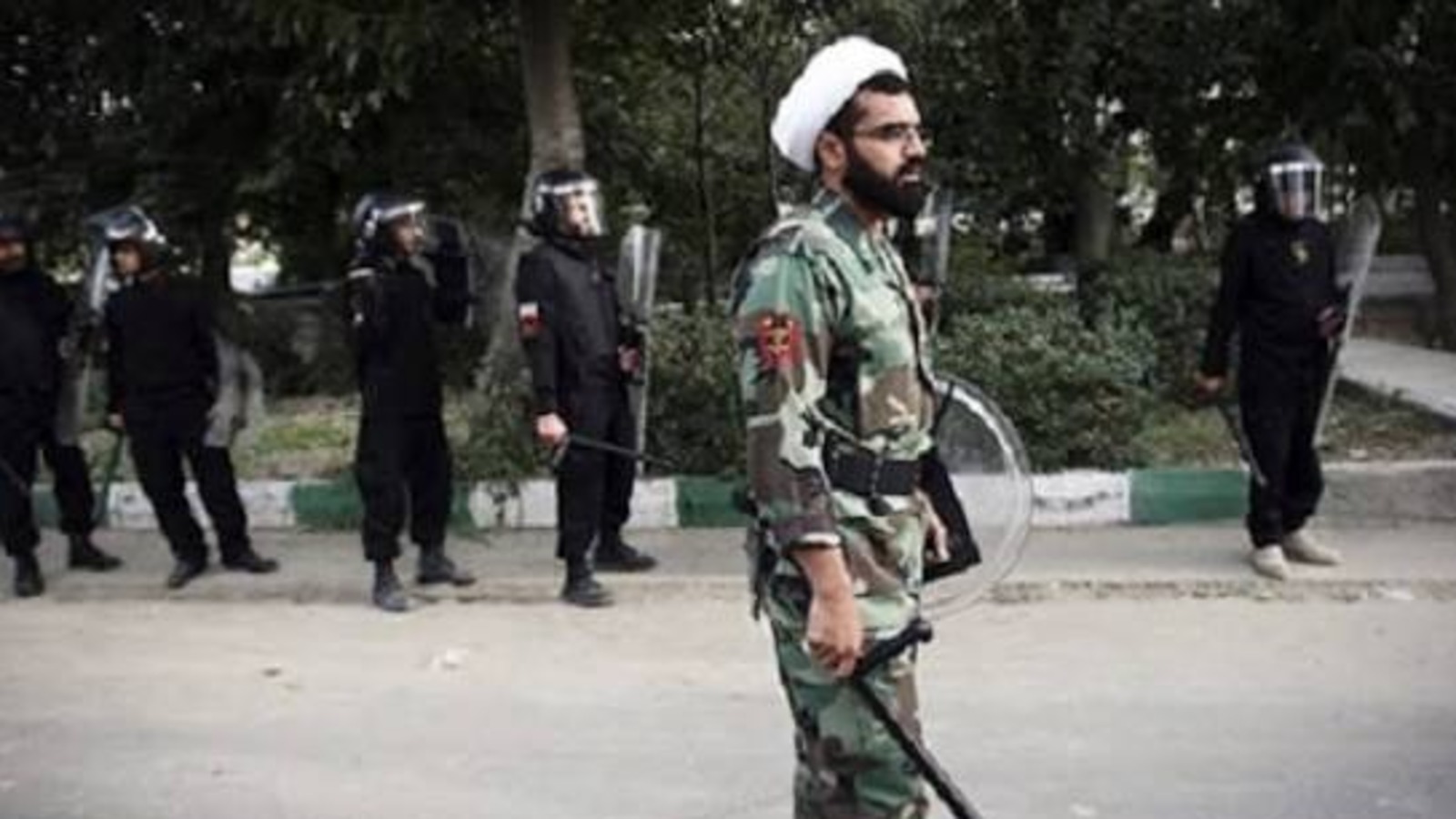
The power of the coercive apparatus depends not only on weapons and money, but also on its ability to isolate opposition groups from one another. When protests remain fragmented, each group can be contained separately. Durable professional, social, and cultural solidarity can make it harder for the repression of one movement to extinguish resistance as a whole.
The end of a street protest does not necessarily mean the end of dissent. Resistance can persist in workplaces, universities, homes, and everyday behavior. Violence may impose conduct, but it cannot restore belief or reconstruct lost legitimacy.
The effectiveness of terror should not be underestimated. Mass repression can dismantle networks for years and sharply reduce the capacity for collective action. Solidarity offers no guarantee of victory. It can, however, limit one of repression’s chief political advantages: the ability to confront each group as an isolated adversary.
Can Economic Pressure Weaken the Security Apparatus?
Iran’s coercive institutions also depend on the discipline of their members, their material interests, and the cohesion of their command structures. Security personnel do not live outside Iranian society. They, too, are exposed to family pressures, inflation, and economic insecurity. Those pressures do not necessarily lead to disobedience, but they can make institutional loyalty more expensive to maintain when state resources are shrinking.
This is where the social crisis intersects with the regime’s internal contradictions. The more the Islamic Republic relies on coercion to govern a society moving away from it, the more resources it must devote to surveillance, policing, patronage, and repression. War and sanctions may simultaneously restrict those resources and intensify competition among the regime’s beneficiaries.
The Islamic Republic may therefore retain the capacity to suppress protest without regaining durable political stability. The central question is not whether violence can still contain demonstrations. It can. The question is whether the regime can continue converting coercion into sustained obedience as the cultural foundations of its legitimacy erode and the cost of repression rises.
The Variable Washington Cannot Control
The outcome will also depend on Iranian society itself: its ability to preserve networks of solidarity, bridge fragmented forms of resistance, and turn economic, social, and cultural aspirations into collective political power. Neither sanctions nor military pressure can manufacture that process from outside.
For American policymakers, this is the central caution. A regime’s loss of legitimacy should not be confused with the collapse of its coercive capacity, and the economic weakening of the state should not be assumed to produce a democratic alternative. No outcome is predetermined. But reducing Iran’s future to the power of its security apparatus would ignore the force that has transformed the country most profoundly over the past several decades: Iranian society itself.
Documentary Sources
World Bank, « Poverty & Equity Brief: Islamic Republic of Iran », October 2025; poverty projections.
International Monetary Fund, « World Economic Outlook », economic projections for Iran in 2026.
World Bank, « Iran Economic Monitor », 2025; Iran Open Data, provincial inflation and unemployment data, September 2026.
United Nations, report A/80/484, paragraph 31, on child labor and children out of school; UNICEF, research on children living and working on the streets in Iran, 2023.