Israel’s reported plan for changing the regime in Tehran failed before its political assumptions were seriously tested. The military elements were ambitious: sustained air strikes, a protected corridor for Kurdish forces entering western Iran, attacks on internal-security institutions and an information campaign intended to encourage nationwide protest. The political elements were thinner. They depended on defections that never came, a figurehead with no demonstrated national mandate and the expectation that Iranian society would move on cue.
The operational sequence
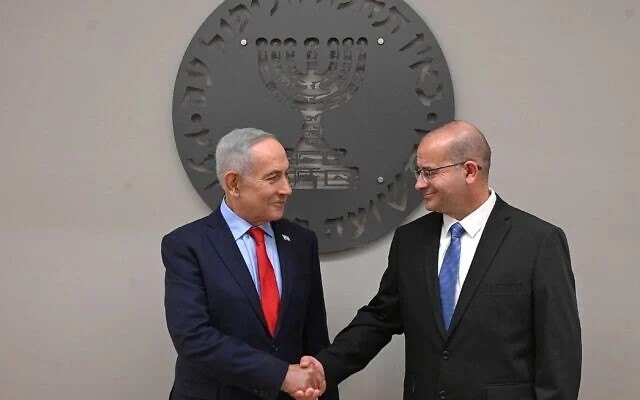
Israeli reporting linked two senior Mossad officials to a written proposal that would combine military pressure with minority groups and renewed mass demonstrations. Other accounts described a Mossad-CIA concept under which Kurdish forces would cross the border under extensive air cover. Le Monde reported that several thousand fighters from multiple Iranian Kurdish organisations were considered and that Mahmoud Ahmadinejad formed part of the intended political sequence.
The sequence broke down at several points. President Trump opposed a Kurdish entry into Iran early in the war. Turkey and Iraq resisted a move they considered dangerous to their own sovereignty. No decisive split emerged in the Islamic Republic’s political or security hierarchy. Ahmadinejad did not become the centre of a viable alternative. The expected uprising did not follow the military timetable.
Four assumptions that did not hold
First, the plan treated military dislocation as if it would produce political coordination. Damaging command structures can reduce a regime’s capacity to repress; it cannot create organisations able to govern, negotiate and maintain public services.
Second, it assumed that hostility to the Islamic Republic would translate into support for an externally designed operation. Iranian society can oppose clerical rule and still reject foreign bombing, territorial fragmentation or a leader selected by foreign intelligence services.
Third, it reduced Kurdish actors to an operational trigger. Iranian Kurdish movements have their own constituencies and political histories. Sending armed groups across an international border would have raised immediate questions about sovereignty and national cohesion, especially in a country where fear of disintegration can override opposition to the regime.
Fourth, it confused a possible successor with a transition. An individual—whether Ahmadinejad or anyone else—cannot by himself provide rules for constitutional change, civilian control of force, protection of minorities or accountability without collective punishment.
The institutional fallout
The Mossad’s internal response remains contested. Channel 12 associated the removal of the intelligence directorate chief and Iran division chief with the failed plan. Security sources also described their departures as mutually agreed and part of a broader reorganisation. The distinction matters: the first account suggests punishment for strategic failure; the second suggests an institutional reshuffle after disagreement. Neither changes the plan’s political deficit.
The lesson is not that external pressure can never affect authoritarian survival. It is that military opportunity and democratic transition are different categories. A credible transition requires organised actors inside Iran, a way to preserve the state while ending the regime, and rules through which citizens—not foreign planners—choose the next order. Without those elements, regime change remains an operation; it does not become a political future.