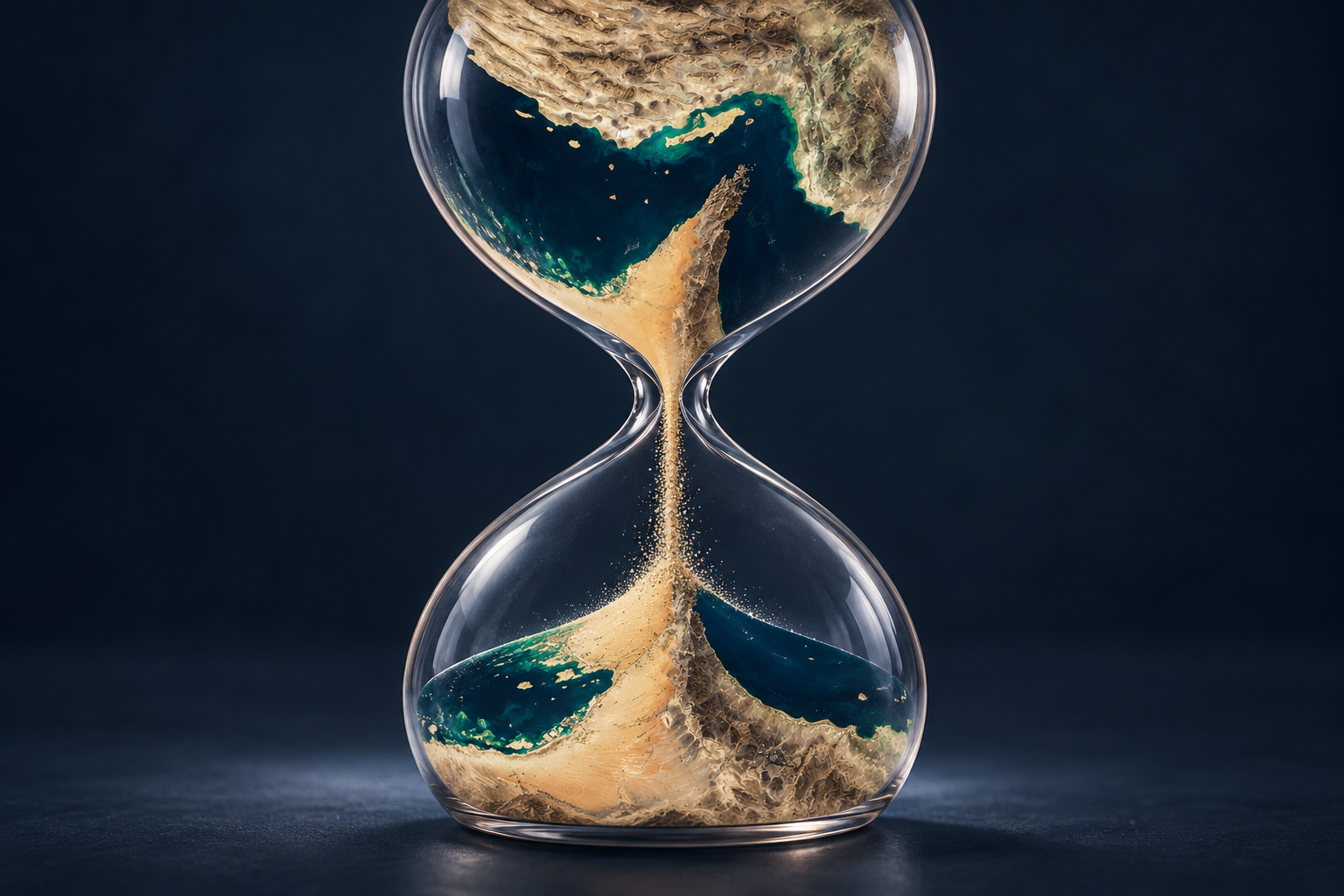
Washington is working toward an election; Tehran is trying to outlast pressure; Iranian society is living with the cost of both. The crisis turns on how these three timetables intersect. The American clock moves with energy prices, the November 3 elections, and the cost of continued military deployment. The regime’s clock is measured by foreign exchange reserves, currency depreciation, the cost of war, declining Hormuz leverage, and its ability to shift pressure from maritime warfare to asymmetric means. Society’s clock moves with economic hardship, the memory of repression, accumulated political experience, organizational capacity, and the possibility of turning discontent back into protest and strikes.
The G7’s decision to release a coordinated 100 million barrels of oil and petroleum products from strategic reserves appears, at first, to be a measure to contain energy prices. Its political significance goes beyond the oil market. The Hormuz crisis has become a contest over time: which side can bear the cost of the present situation for longer?
By disrupting one of the world’s main energy arteries, the Islamic Republic has shifted part of the cost of war onto the United States, Europe, and regional economies. In the United States, rising prices for oil and, especially, refined products such as diesel also have political consequences ahead of the November 3 midterm elections.
The G7 timetable is as significant as the volume: 100 million barrels over four months, with substantial diesel releases in the first twenty days and a follow-up report due within that period. The stated goal is to stabilize energy markets. Politically, cushioning the shock can also give governments more time to decide their next move. It does not settle the dispute over Hormuz.
Tehran is also paying for delay. The rial has fallen to historic lows. Reuters reports inflation above 70 percent. Citing state television, it says state banks have begun selling up to $2 billion to support the rial. The two sides have very different resources with which to sustain the confrontation.
Disruption does not mean control
The Islamic Republic’s strategy rests on a clear calculation. If disruption in the strait imposes a sufficient economic and political cost on the United States and its allies, pressure for an agreement will grow. The strategy has had an effect. The major economies’ renewed resort to emergency reserves demonstrates that the energy pressure is real.
Yet global markets and regional states are adapting quickly. Saudi and Emirati pipelines, ship-to-ship transfers, and alternative routes have reduced some of their dependence on Hormuz. In September, regional crude exports, excluding Iran, reached approximately 16.5 million barrels a day, approaching their prewar level.
Refined products remain more vulnerable. Their flows have fallen sharply compared with the period before the war, which is why diesel is central to the G7’s latest measures.
Economic adaptation is now accompanied by military and security adaptation. Protecting alternative infrastructure, including the Red Sea port of Yanbu, strengthening regional defenses, and expanding the US military presence show that the response is no longer confined to drawing on emergency stocks. The Wall Street Journal, citing US officials, reports plans to send a third carrier strike group, with the reinforcements due by the end of November.
For Iran’s rulers, the implication is clear. The Islamic Republic can still make the strait unsafe and expensive to navigate. But the ability to cause disruption is different from the ability to dictate political terms. As energy flows adapt and military protection expands, the gap between those capabilities can widen. Hormuz leverage has not disappeared; its political value is neither fixed nor immune to erosion.
This also matters for negotiations. Before its leverage weakens further, the regime wants to convert it into concrete concessions, from reduced economic pressure and the lifting of restrictions to arrangements governing the strait. Washington, by contrast, has little reason to surrender its principal pressure instrument and only then begin negotiating the nuclear issue. The dispute concerns not only what is to be negotiated but also the sequence in which concessions are made.
From maritime disruption to asymmetric warfare?
The declining effectiveness of one instrument does not necessarily diminish the Islamic Republic’s willingness to exert pressure. It may have the opposite effect. If the regime becomes less able to sustain disruption in Hormuz, while Bab el-Mandeb comes under stronger regional and international protection, a security question becomes more pressing: will it compensate by turning more heavily to means it describes as asymmetric or unconventional warfare? These include proxy forces, cyber operations, sabotage, and covert or deniable operations beyond the region.
The Islamic Republic’s record of targeting dissidents, Israelis, Jews, and other foreign interests outside Iran is serious enough to warrant heightened attention to these activities as more conventional instruments weaken. Reduced power in Hormuz would therefore not necessarily mean a reduced external threat. It could change the form of that threat.
What changes after November 3?
Under these circumstances, the US midterm elections have become a political threshold. Fuel prices directly influence voters’ decisions, giving the Trump administration a strong incentive to contain them before election day.
Axios reports Iran–Yemen talks at Camp David. Read alongside the military buildup, those discussions suggest that Washington is considering the next phase. They do not establish that it has already chosen escalation.
The G7’s recent alignment with Washington is not merely economic support for the United States. Energy, freedom of navigation, and the security of commercial routes have become a shared problem. Governments that differ over policy toward Iran can converge on preventing lasting disruption to the main arteries of global trade.
After November 3, one variable in Washington’s calculation will change: immediate electoral pressure from fuel prices. The new composition of Congress may also affect the administration’s room for maneuver. If negotiations have failed by then, but the United States and its allies have contained the energy shock and reduced their vulnerability to the Hormuz pressure instrument, an important constraint on US decision-making will have eased.
That development could also encourage Iran’s rulers to compromise. The reverse remains possible, however. Part of the regime’s power structure, especially the Islamic Revolutionary Guard Corps, may regard compromise under pressure as defeat and seek to restore deterrence through escalation or other forms of asymmetric warfare.
The election therefore does not necessarily open a single door. Two paths may become more accessible: agreement following a shift in the balance of pressure, or intensified confrontation if agreement fails.
Iran’s rulers cannot assume that Russian and Chinese support is unlimited. Moscow has strategic reasons to oppose the complete defeat of the Islamic Republic or the expansion of US influence in Iran. Russia, however, remains engaged in the war in Ukraine. There is a fundamental difference between political, economic, or indirect military support and direct confrontation with the United States.
China’s dilemma is even clearer. Beijing likewise has reasons to oppose the Islamic Republic to collapse or an Iran fully aligned with Washington to emerge. Yet secure energy flows through the Persian Gulf are vital to China’s economy. The regime cannot indefinitely disrupt one of China’s major energy supply routes while expecting Beijing to bear the cost in order to preserve it.
States with very different policies and interests may therefore converge, without necessarily forming a formal coalition, around one shared interest: preventing permanent disruption to the principal routes of energy and global trade.
The decisive front may be inside Iran
Reducing this contest over time to Washington, Iran’s rulers, and Hormuz overlooks another essential actor: Iranian society. The Islamic Republic ultimately passes the cost of external confrontation onto a society whose rupture with the political system predates the current war. Currency depreciation, inflation, declining purchasing power, insecure employment, and rising daily costs now weigh on a population for whom the protests of December 2025 and January 2026 remain a vivid memory.
Those protests also began with the currency crisis and deteriorating living conditions, then rapidly became a challenge to the political system as a whole. Repression halted the large-scale street presence. It did not resolve the problem from which the protests emerged.
Over four decades, the Islamic Republic has repeatedly driven protesters from the streets with escalating violence. But containing one wave of protest is different from removing its social causes. From 2009 to 2017 and 2019, from “Woman, Life, Freedom” in 2022 to the protests of 2025–26, the social crisis has repeatedly returned in different forms and with different participants.
Repression is therefore only one side of the equation. The other is a society accumulating its own experience: methods of repression, internet shutdowns, arrests, organizational weaknesses, the limitations of exclusively street-based protest, and the need to connect different social groups.
There is no way to prove that this experience will necessarily make the next protest movement more successful. Equally, there is no reason to assume that the same instruments will produce exactly the same outcome. Repression buys the regime time, but not at no cost. Each wider use of violence can preserve some deterrent capacity while deepening the crisis of legitimacy, accumulated anger, and the desire for change.
What could make the next protest movement different?
The central issue is not simply the number of protesters. Experience shows that even a large street mobilization is insufficient, on its own, to change a political system. A more important variable is a movement’s ability to spread from one social group to others: workers, merchants, employees, students, pensioners, the middle classes, and professional groups. The most important factor in a social movement’s success is the participation of different groups and classes in common action against the existing order.
A second factor is the capacity to connect street protests with broad and sustained strikes. The street challenges the government’s legitimacy; strikes also place its capacity to administer the country and sustain economic flows under pressure.
A third factor is the behavior of the state apparatus. A worsening economic crisis, prolonged war, or expanding protest can change the conduct of officials and security personnel, including the forces of repression. Finally, opponents of the Islamic Republic confront a problem that repression alone cannot explain: the gap between the ability to reject the existing system and the ability to inspire confidence in what follows it.
Regime change is not yet democratic transition
The crisis of the Islamic Republic and democratic transition are not the same problem. Even a movement that succeeds in weakening or removing the existing order can produce a power vacuum, violent rivalry, or renewed authoritarianism without a minimal agreement on the rules of the next political system.
Iranian society does not need full agreement on every question concerning its future. Such agreement is neither possible nor a requirement of democracy. What matters more is agreement on rules for managing disagreement: free elections, the rule of law, separation of religion and state, equal citizenship, political and individual freedoms, territorial integrity, and acceptance of peaceful changes in power.
A movement that knows only what it rejects can bring a government into crisis. To build a different political order, it must also create confidence in the rules of a shared life after that government.
Time bought is not an outcome secured
The clocks do not move at the same speed, and none is entirely under political control. Trump cannot fully control energy prices; the Islamic Republic cannot stop economic erosion; and neither Washington nor Iran’s rulers can determine when or how society will return to the political arena.
None of these clocks predetermines the outcome of the others. The G7 may contain the energy crisis for a time without inducing the Islamic Republic to retreat. The regime may bear much greater economic pressure without immediately triggering nationwide protest. Widespread protest, in turn, does not by itself guarantee democratic transition.
Yet another conclusion must not be treated as inevitable: that the Islamic Republic can always purchase the time it needs for survival by increasing violence. Iranians are not in the same position as when they experienced the earliest protest waves. Nor does the regime possess the economic resources, legitimacy, or regional environment it had ten or twenty years ago.
The decisive question is therefore not only what Washington will do after November 3, or how long the Revolutionary Guards can disrupt Hormuz. It is which of these three clocks will first overturn the calculations of the other two. Iranian society must not be treated as a secondary variable in the war. It may ultimately be where the contest over time acquires its real political meaning.