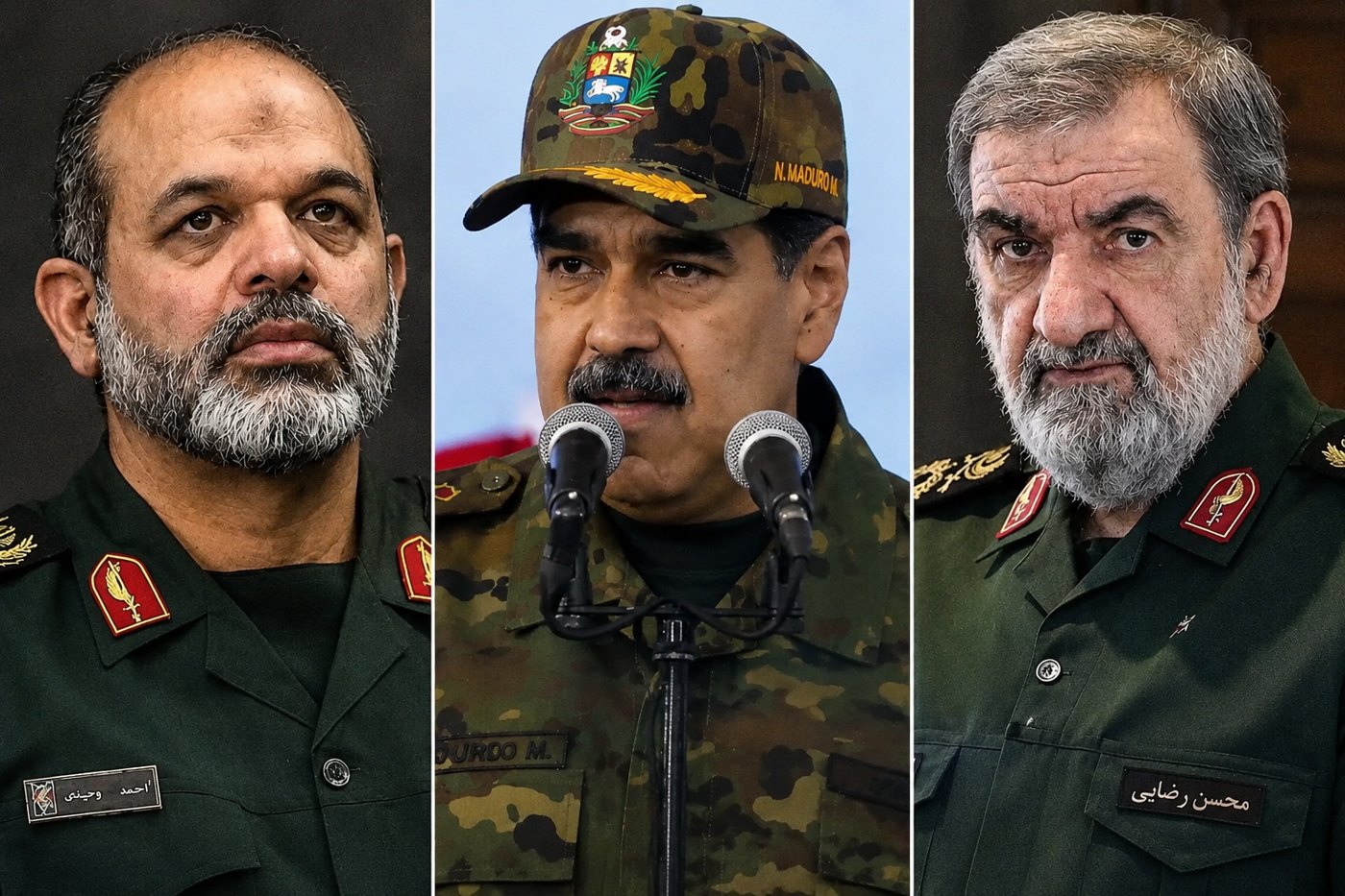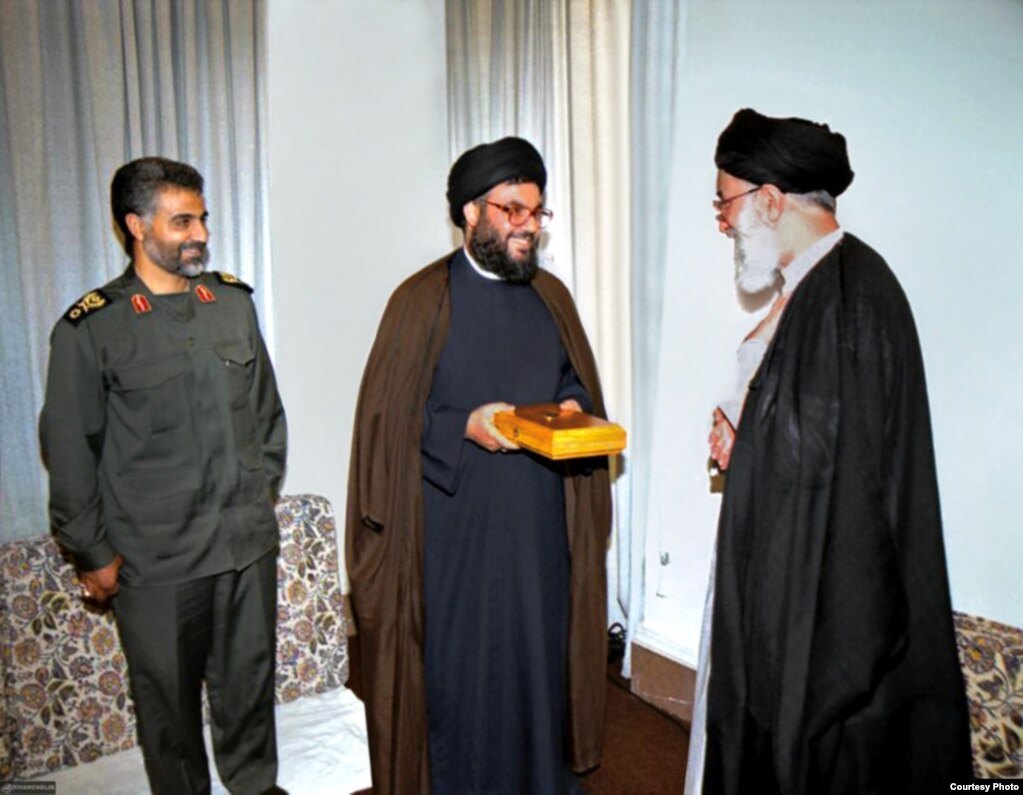
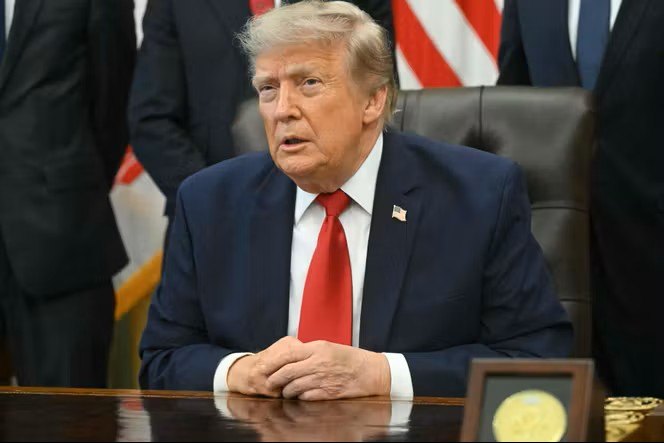
Donald Trump’s shifting tone toward the Islamic Republic may reflect more than his negotiating style. Behind alternating offers and threats lies a basic question: after Ali Khamenei’s death, who actually decides? A durable strategy is difficult when one cannot identify the authority with which one negotiates or the centre directing confrontation.
American references to the Iranian leadership often use a collective “they.” Does that mean the presidency, Revolutionary Guards, Supreme National Security Council, religious leadership or several competing networks? Can those offering an agreement bind those directing military operations?
This difficulty is not unique to Iran. The United States has never possessed perfect knowledge of its adversaries. It becomes particularly consequential, however, when the centre that arbitrated rivalries has disappeared. Detailed information about separate institutions does not necessarily reveal how their positions become a common decision.
Recognising an actor and its power to commit
Carl Schmitt’s distinction between friend and enemy presupposes an identifiable political unit. Without adopting his normative account, we can draw a practical question from it: which authority speaks for that unit? Knowing who controls a weapon does not tell us who can end its use.
Hegel’s treatment of recognition and Habermas’s account of the conditions of dialogue illuminate other dimensions. Neither is a manual for diplomacy. They help distinguish the existence of an interlocutor from its ability to answer for an undertaking.
A signatory may formally represent a state without controlling every institution. An agreement can therefore be announced but remain politically unenforceable. Conversely, a leadership may possess the capacity to implement it and deliberately choose not to. These are different problems requiring different responses.
What is pressure meant to achieve?
The uncertainty affects American war aims. Is pressure intended to restore negotiation, change behaviour or bring about the regime’s removal? Those objectives are not interchangeable. The first needs an interlocutor, the second an enforceable decision and the third a strategy for what follows.
Secure navigation through Hormuz is a concrete objective. It does not alone define the political and regional order war is intended to produce. If the waterway opens today but the same institutions can close it tomorrow, a strategy must explain how the result will endure.
The memorandum signed on June 17, after an agreement was announced on June 14, exposed the problem. It opened a negotiating period and promised de-escalation. Each side could still frame it as victory. Competing narratives did not determine the agreement’s actual value, but they formed part of its political use.
Renewed confrontation in July does not by itself prove that Iranian signatories had lost all control. It allows several possibilities: internal disagreement, a coordinated decision to reverse commitments, conflicting interpretations of reciprocal obligations or failure of implementation. These mechanisms may overlap.
The distinction matters for Washington. Punishing a deliberate breach, securing arbitration from a divided leadership and changing the terms of an agreement are not the same task. Treating every difficulty as bad faith can obscure the structure producing it.
Three different crises
The first concerns the organisation of the state. The Islamic Republic has administration, institutions, territory and coercive capacity; saying it never constituted a state would be misleading. Its contradiction is the coexistence of public institutions with religious sovereignty that places final arbitration above equal citizenship.
That contradiction predates Khamenei. Concentrated powers in the office of Supreme Leader could unify the system while limiting institutional autonomy and accountability. His death did not create the problem. It tested the mechanism that had contained it.
The second crisis concerns concentrated authority. For more than three decades, Khamenei arbitrated among the presidency, parliament, Guards, intelligence services, his own entourage and economic networks. Rivalries persisted, but actors knew where to seek an ultimate decision.
The office-holder’s death does not prove that the function cannot be rebuilt. It does require asking whether the successor commands equivalent mediation and obedience. Constitutional appointment and effective authority are not identical.
The third crisis concerns succession to that unifying function. In 1989, replacing Khomeini was difficult, but the regime retained greater revolutionary resources and the clergy more political weight. The Guards had not yet acquired their subsequent economic and institutional reach.
Today, weakened legitimacy, military losses and the strength of the security apparatus change the conditions. The question is not merely whether another person can be appointed. It is whether any individual or arrangement can bring increasingly autonomous and competing interests into a common decision.
Strong networks, uncertain arbitration
A single economic definition cannot capture this structure. Military, intelligence, religious and rent-seeking networks have both shared and conflicting interests. Preserving the system unites them; distributing resources and offices divides them.
Guardianship of the jurist long helped contain these rivalries. War did not invent them. It can expose and intensify them, but accessible information does not let us measure the cohesion of each institution precisely.
The term power vacuum therefore requires care. Power remains: administration works, intelligence agencies monitor and armed forces operate. The possible vacuum concerns final arbitration and responsibility, not the disappearance of every capacity to act.
This produces a paradox. A regime may retain substantial coercive capacity while becoming less predictable as an interlocutor. A military operation demonstrates that a command acts; it does not demonstrate that one authority can sustainably halt every operation.
U.S., Israeli and internal alternatives
American and Israeli objectives may diverge. Some Israeli officials connect the threat to the Islamic Republic’s governing structure, while Washington may seek a narrower capabilities agreement. But Israel’s participation or absence in a particular phase does not by itself establish a decision to pursue regime change.
Pressure for concessions must be distinguished from pressure for political transformation. The former may stabilise the system after a bargain; the latter raises the problem of replacement authority. The same strike may serve different intentions that its occurrence cannot settle.
A third possibility is to encourage internal recomposition: some institutions might impose compromise on others. It appeals to foreign actors seeking continuity without current policies. It also depends on accurate knowledge of divisions and capacities that cannot be assumed.
Competition among commanders is not readiness for organised confrontation. Networks can quarrel over resources while remaining united against foreign pressure or domestic protest. Confusing rivalry with defection exaggerates what coercion can achieve.
Who can commit Iran’s future?
A prolonged arbitration crisis may produce a new internal centre, clearer military domination, a collective arrangement or a claim from outside the regime. No outcome is automatic. Fragmented administration can also persist without decisive resolution.
The question therefore reaches Iranian political society. Is there a force able to represent a transition, preserve essential functions and become a legitimate interlocutor for the world, including the United States and Israel? Declaring an alternative does not supply those capacities.
Such a role requires credible commitments: succession rules, pluralism, protection of inhabitants, service continuity, control of weapons and a procedure through which citizens choose future institutions. Foreign recognition alone cannot confer legitimacy.
The crisis visible in Hormuz and at negotiating tables thus returns to a fundamental political question: who can speak for the state, promise, implement and answer? While that capacity remains uncertain, agreements remain fragile and military strategies risk postponing the question they need to resolve.