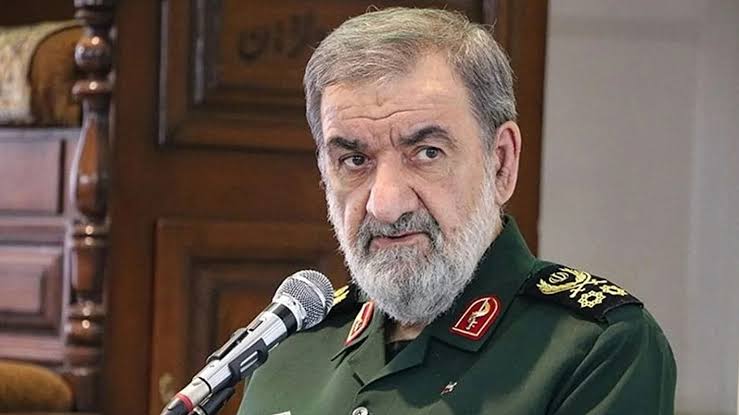
On November 11, Mohsen Rezaei, secretary of Iran’s Supreme National Security Council, threatened to strike US military bases in Europe if they were used to attack Iran. The warning came a month after a cyberattack on refrigeration systems at around 700 French retail sites caused extensive food losses and at least 15 fires. On November 9, Paris formally attributed the operation to the Shahid Kaveh cyber unit, linked to the Islamic Revolutionary Guard Corps (IRGC).
The two events are different in kind, but they raise a common question: how does the Islamic Republic use military capabilities, clandestine networks and other forms of coercion to threaten European states and constrain their freedom of action?
The relationship is marked by a persistent asymmetry. European governments seek to preserve diplomatic channels and the possibility of negotiation; the Islamic Republic has repeatedly used violations of those norms as instruments of pressure. Over several decades, its clandestine capabilities and retaliatory options have become means of narrowing European governments’ room for manoeuvre.
Coercion reinforced by Western concessions
Since the seizure of the US embassy in Tehran in 1979, hostage-taking and pressure on foreign missions have formed part of the Islamic Republic’s repertoire of coercion. The concessions obtained in return have at times helped reduce the cost of using these methods.
In 2010, France released Ali Vakili Rad, who had been convicted of assassinating Shapour Bakhtiar. The release came two days after Clotilde Reiss was freed, fuelling suspicions of a diplomatic arrangement. In 2023, Belgium released Assadollah Assadi, convicted over a plot to bomb a gathering near Paris, under an agreement that secured the release of four Europeans detained in Iran, including Belgian aid worker Olivier Vandecasteele.
The detention of dual nationals has also coincided with major financial settlements: £393.8 million paid by the United Kingdom in 2022 and $1.7 billion by the Obama administration in 2016, both in settlement of longstanding Iranian claims. The two governments described the payments as debt settlements, not ransom payments.
These precedents reveal a paradoxical balance of power. Despite their economic and military superiority, Western governments can see their freedom of action constrained by threats to their citizens. The coercive pressure takes on another dimension when Tehran has networks on their own territory capable of monitoring, intimidating or carrying out clandestine operations.
A clandestine apparatus operating across Europe
The Assadi case illustrates the reach of such activity. A diplomat posted in Vienna, he occupied a central position in a clandestine network linked to Iran’s Ministry of Intelligence. Notebooks seized by investigators contained information on payments, contacts and locations in several European countries.
In February 2023, Germany’s federal government disclosed that its intelligence services had identified 160 people with ties to the country who showed indications of links to the IRGC. Berlin also said that the Quds Force had conducted espionage on German soil for more than a decade, including against Israeli and Jewish interests.
These operations extend beyond diplomatic missions. Commercial companies, religious and cultural organisations, financial intermediaries and contacts within diaspora communities can be used to monitor opponents, facilitate clandestine operations or circumvent international sanctions.
Media influence is another part of this landscape. British authorities have documented Tehran’s use of state media, social networks and platforms presented as independent. Persian-language media based abroad are particularly exposed to intimidation and attempts to influence editorial decisions.
The use of criminal networks
Criminal organisations can serve as an extension of these clandestine activities. In July 2025, the European Union sanctioned the Zindashti network over its involvement in transnational repression linked to Iran’s Ministry of Intelligence.
In Sweden, the Security Service (Säpo) said as early as May 2024 that Tehran was using local criminal networks to prepare or carry out violence against foreign interests and dissidents. Its 2024–2025 annual report recorded the continuation of these activities. Säpo also attributed to the IRGC a cyber campaign intended to deepen divisions in Swedish society.
Separately, US investigations have uncovered connections between Hezbollah-linked financial networks, money laundering and drug trafficking, including in Latin America.
The Swedish case shows how Iranian services can mobilise criminal networks already present in a European country. It points to a capacity for disruption that no longer depends solely on the Islamic Republic’s diplomatic, military or digital resources.
Tehran’s threats reach into Europe
Mohsen Rezaei’s November 11 statement was not the first Iranian threat directed at Europe. A few days earlier, Rouhollah Lak Ali-Abadi, a member of parliament for Dorud and Azna, had spoken of military, security or intelligence retaliation against European countries supporting the United States and Israel. His remarks were reported by Tasnim and republished by Jamaran.
“Iran will strike at the heart of Europe without any restrictions, and we have the means to do so, as Iran’s structures of power and influence in France and Italy clearly show today,” he said.
The lawmaker’s remarks do not amount to an official statement by Iran’s military command. Rezaei’s warning, by contrast, came from the highest levels of the national security apparatus. It confirms that Iranian officials are now openly discussing retaliation on European soil, at least against US military facilities involved in any renewed attacks.
These military threats add to clandestine activities already documented in Europe. They take on particular significance after the French student movement that began in September 2026 and the demonstrations that continued into October. On October 7, Paris denounced an Iranian disinformation campaign concerning these events. That publicly reported information operation does not, however, establish that Tehran organised the demonstrations or the violence associated with them.
The IRGC’s growing grip on power
The widening range of external threats is unfolding alongside a shift in the balance of power in Tehran, where the Islamic Revolutionary Guard Corps has become increasingly dominant.
A proposed reform of Iran’s Ministry of Intelligence, still moving through the legislative process, would remove the requirement that the minister possess the religious qualification of ijtihad. It would also create two bodies within the ministry—one responsible for internal security and the other for ideological affairs—with their heads appointed directly by the Supreme Leader.
The proposal follows the June 2025 and February 2026 wars. Ali Khamenei was killed in Israeli-American strikes on February 28, 2026. Intelligence Minister Esmail Khatib was killed in March 2026, amid longstanding rivalry between his ministry and the IRGC’s intelligence organisation, which gained greater autonomy in 2009.
With reformists politically marginalised and the state increasingly militarised, the reorganisation could alter the balance within Iran’s intelligence apparatus. It does not, by itself, mean that the Ministry of Intelligence would come under IRGC control. It could nonetheless further centralise security decisions around the Supreme Leader and the bodies directly subordinate to him.
This development matters directly to Europeans: it concerns a security apparatus already engaged in clandestine operations abroad, at a time when Iranian leaders are issuing increasingly explicit warnings to Western countries.
Europe’s constrained decision-making
Europe’s prolonged hesitation to designate the IRGC as a terrorist organisation illustrates the difficulties European governments have faced in responding to Iran’s coercive policies.
As German and Swedish agencies documented Iranian clandestine activity, several European governments, including France, worried that such a designation could affect diplomatic negotiations and the fate of their citizens detained in Iran. Legal considerations, including the evidentiary requirements for inclusion on the EU terrorist list, also formed part of the debate.
Following a political agreement reached on January 29, 2026, the Council of the European Union formally added the IRGC to its terrorist list on February 19.
The lengthy process exposes a contradiction: pressure tactics developed by the Islamic Republic may have contributed to some governments’ reluctance to adopt measures intended to counter them, although Iranian blackmail was not the only reason for that hesitation.
Listing the IRGC as a terrorist organisation is not enough to dismantle networks whose decision-making centres remain in Tehran. Effective deterrence requires identifying and sanctioning those who order operations, prosecuting those who carry them out, dismantling their financial channels and front structures, and strengthening European counter-intelligence. It also requires reducing the scope for blackmail based on the detention of foreign nationals.
So long as Tehran can conduct clandestine operations on European soil, threaten foreign nationals and use those pressures to influence government decisions, French and European sovereignty will remain exposed to its instruments of coercion.
Since the wars of 2025 and 2026, the Islamic Republic has viewed its survival as directly threatened. The risk is that Tehran will transfer to European soil methods of disruption and deterrence long used in the Middle East, including through allied organisations. Mohsen Rezaei’s military threats, the cyberattack attributed to the IRGC in France and documented clandestine activity in several European countries show the different forms that pressure could take. The aim would be to make European societies bear the cost of supporting Tehran’s adversaries and, in turn, to influence their governments’ decisions.
European states must therefore reassess their security and deterrence doctrines, or risk seeing their freedom of action further constrained by an Iranian state whose militarisation and radicalisation have intensified.